NFL Playoff Betting Strategy: How Postseason Games Differ for UK Punters
 Available in US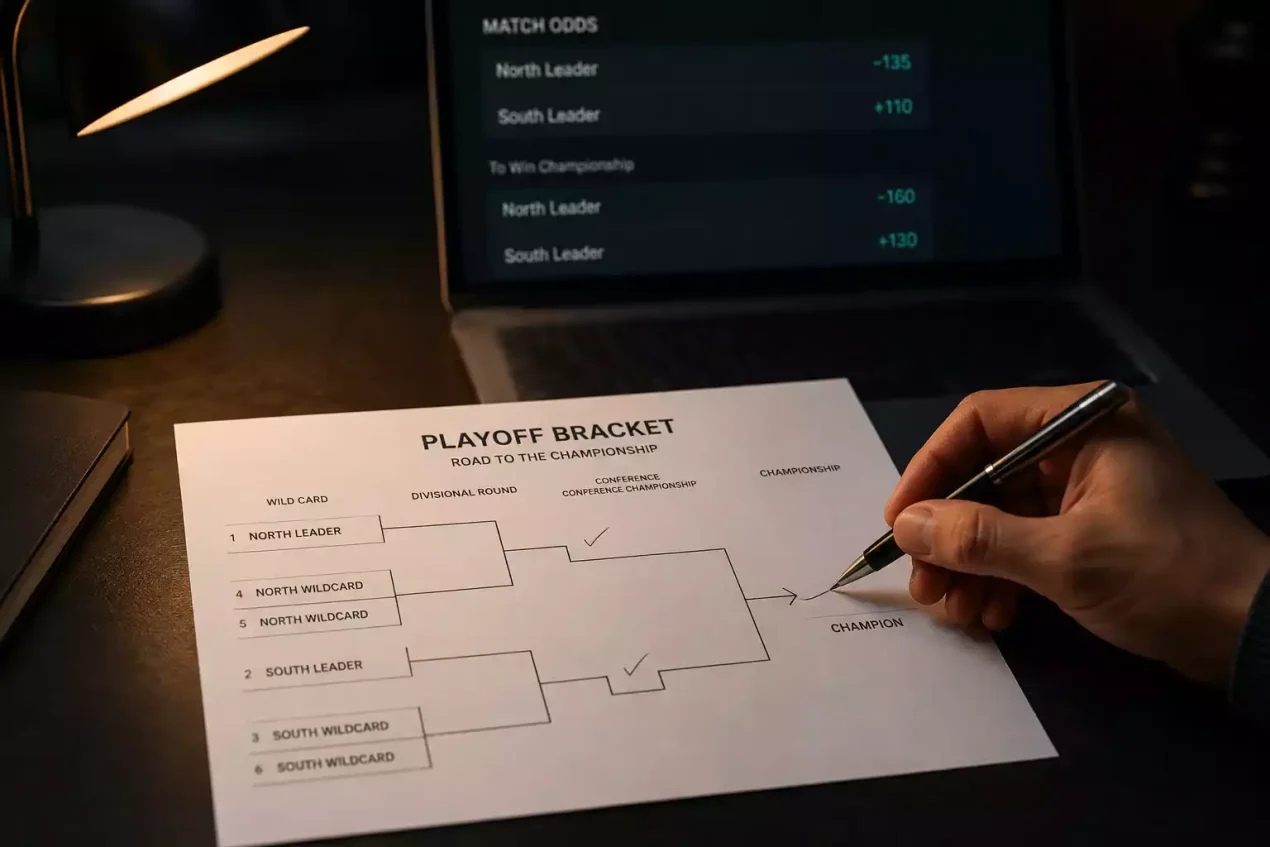
The first time I bet on an NFL playoff game, I treated it exactly like a regular-season fixture. Same analysis, same staking, same confidence level. I lost. The second time, same approach, same result. It took me three postseasons to accept that playoff football is a structurally different product from the regular season — and that my regular-season playbook needed a different chapter for January and February.
NFL playoff games are single-elimination contests between the best teams in the league. That sentence sounds obvious, but its implications for betting are profound. The talent gap narrows, coaching adjustments intensify, and the psychological pressure creates performance swings that rarely appear during the 18-week slog of September to January. If you apply regular-season logic to playoff betting, you will consistently misjudge the spreads, the totals, and the prop markets. Here is what to do differently.
Why NFL Playoff Betting Requires a Different Approach
During the regular season, the AGA estimated that legal NFL betting in the US reached $30 billion in 2025 — an 8.5% increase over the previous year. A meaningful chunk of that volume lands on playoff and Super Bowl markets, where casual bettors flood in alongside the regulars, distorting the lines in specific ways.
The first structural difference is team quality compression. In the regular season, a 12-5 team might face a 4-13 team, producing spreads of 10 points or more. In the playoffs, the worst team in the field is typically 9-8 or 10-7, and they earned their spot by winning meaningful games down the stretch. Spreads in the Wild Card round rarely exceed 7 points, and by the Conference Championship round, most lines sit between 1 and 4.5. This compression means the spread carries less margin for error — covering a 3-point spread in a playoff game between two elite teams is fundamentally harder than covering a 10-point spread in a Week 6 mismatch.
The second difference is preparation depth. Regular-season game plans are built in a week. Playoff game plans benefit from two weeks of preparation (for teams with a bye) and months of advance scouting. Coaches save their best schematic adjustments for the postseason, which means tendencies you identified during the regular season may not hold. A team that ran the ball 55% of the time in the regular season might shift to a pass-heavy approach in the playoffs to exploit a specific matchup — and the market, anchored to regular-season data, takes time to adjust.
The third difference is public money. Casual bettors, many of them betting on NFL for the first time each year during the playoffs, tend to back favourites, overs, and marquee players. This public money pushes lines in predictable directions: favourites get overvalued, totals drift higher than they should, and star-player prop lines inflate. Sharp bettors know this, which is why contrarian approaches — underdogs, unders, and overlooked role players — tend to perform better in the postseason than during the regular season.
Round-by-Round: Wild Card, Divisional, Conference and Super Bowl
Each playoff round has its own character, and the betting dynamics shift as the tournament narrows.
Wild Card weekend features six games across three days. The top seeds in each conference have a bye, so the matchups tend to pit the second and third seeds against the sixth and seventh seeds. These games produce the widest spreads of the playoff bracket, and because six games provide more volume, this is the round with the most betting opportunities. The variance is also highest here — Wild Card upsets happen regularly, and the sheer number of games gives you the best chance to find a mispriced line.
The Divisional round drops to four games and introduces the top seeds. Home-field advantage matters more here because the higher seeds have earned the right to play at home, and the crowd energy in a Divisional round game is noticeably louder than a regular-season fixture. Spreads tighten further, and the games tend to be lower-scoring as defences sharpen for elimination football. If you are betting totals, this is the round where the under starts to carry disproportionate value.
Conference Championships reduce the field to four teams and two games. These are the most strategically complex games of the NFL season, because both coaching staffs have two full weeks to prepare and both rosters are largely healthy after the bye-week rest that top seeds received. The market has the most data to work with at this point, which means lines are efficient — but not perfectly so. Small edges still exist in prop markets, where the books have less historical data to lean on for specific matchups.
The Super Bowl is its own universe. In 2026, Super Bowl LX generated an estimated $1.76 billion in legal betting in the US alone. The two-week gap between the Conference Championships and the Super Bowl creates a long window for line movement, public money, and media-driven narratives to distort the market. By kickoff, the spread has been picked over so thoroughly that the main game lines are among the most efficient in all of sports betting. The value in Super Bowl betting tends to sit in the margins: prop markets, novelty bets, and first-half lines where the books have less confidence in their numbers.
Playoff Trends That Matter for Spread and Totals Bettors
I am cautious about historical trends because the NFL evolves constantly — rule changes, coaching turnover, and roster churn mean that a pattern from five years ago may not hold today. That said, a few playoff trends have persisted long enough to be worth noting.
Underdogs cover the spread more frequently in the playoffs than during the regular season. The compression of talent means that dogs are closer in quality to the favourite than regular-season records suggest. A 9-8 Wild Card team that lost three games by a combined 7 points is not the pushover that its record implies, and the market sometimes fails to reflect that resilience.
Totals tend to go under in the later rounds. Divisional and Conference Championship games have historically hit the under at a rate above 50%, driven by tighter defensive play, longer possessions, and conservative clock management by teams protecting leads. The effect is less pronounced in the Wild Card round, where blowouts can push scoring well above the total, but from the Divisional round onward, the under deserves a closer look than most punters give it.
Home teams in the playoffs perform better against the spread than home teams during the regular season. The home-field advantage in the NFL has been declining for years in the regular season, but it reasserts itself in the playoffs, where crowd noise, travel logistics, and the emotional weight of a home elimination game amplify the environment. If you are considering a spread bet in the Divisional or Conference round, give the home team an extra half-point of mental credit beyond what the line already accounts for.
One trend that has reversed in recent years: the idea that defensive teams dominate the playoffs. The modern NFL is an offensive league, and the last several Super Bowl winners have been led by elite quarterbacks and high-scoring offences. Do not assume that a team’s defensive ranking alone predicts postseason success — look at the offence’s ability to sustain drives and control tempo, which is what wins in January.
Sharpening Your Edge When the Field Narrows
Playoff betting rewards the punter who adjusts. If you have spent the regular season building a weekly analysis framework, the postseason is where that investment pays dividends — but only if you are willing to recalibrate. The spreads are tighter, the totals are lower, the public is louder, and the coaching adjustments are deeper. Respect those differences, and the playoffs become the most profitable stretch of the NFL calendar. Ignore them, and you will give back everything you earned between September and December.
Do UK bookmakers increase the number of NFL markets during the playoffs?
Yes. Most UK sportsbooks expand their NFL market offerings significantly during the playoffs, particularly for the Conference Championships and Super Bowl. A regular-season game might carry 50-80 markets at a major UK operator; a Super Bowl can exceed 200 markets including novelty props, quarter-specific lines, and player performance specials.
Are playoff unders historically more profitable than regular-season unders?
Over the past decade, unders have hit at a slightly higher rate in the Divisional and Conference Championship rounds compared to the regular season. The trend is driven by tighter defensive play, more conservative game management, and reduced scoring variance when elite teams meet. However, the sample size is small — only 10-12 games per round per season — so this is a tendency to factor into your analysis, not a guaranteed edge.
This material was created by the GridPunt team.
Related posts

NFL Betting Market Outlook for UK Punters: Trends Shaping 2026 and Beyond
NFL Betting Mistakes to Avoid: Errors That Cost UK Punters Money