NFL Betting Mistakes to Avoid: Errors That Cost UK Punters Money
 Available in US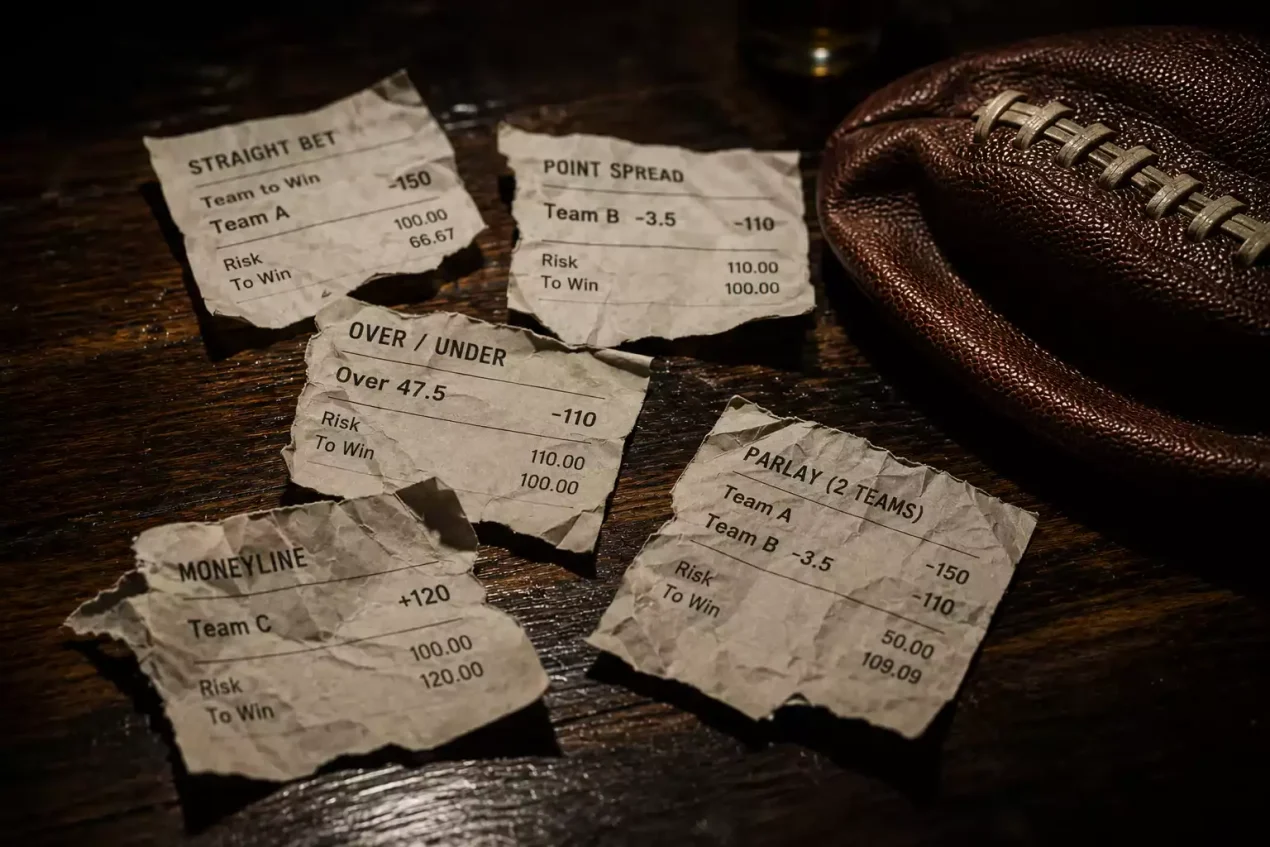
I have made every mistake on this list. Some of them I made repeatedly before the lesson stuck. The difference between a losing NFL season and a profitable one is rarely about picking better games — it is about eliminating the behavioural errors that drain your bankroll between the good picks. These are the mistakes I see UK punters make most often, the ones I have made myself, and the ones that, once identified, are entirely within your control to fix.
Chasing Favourites and Ignoring the Line
The most common mistake among NFL bettors new to spread betting is backing the team they think will win without considering the price they are paying to do so. The Chiefs might be the better team — but are they 10.5 points better? The Bills might dominate the matchup — but at -350 on the moneyline, the price has absorbed all of that dominance and then some.
Point spread is the preferred bet type for 61% of NFL bettors, and for good reason: the spread forces you to consider the margin, not just the outcome. Backing a -10.5 favourite is not a bet on whether they win — it is a bet on whether they win by 11 or more. That distinction is the heart of NFL betting, and punters who ignore it are systematically overpaying for favourites.
The error compounds in accumulators. Stacking three heavy favourites on the moneyline at -300, -250, and -200 produces a combined price of roughly 3/1 — modest returns for the risk of needing all three teams to win outright. A single upset destroys the acca. The same three games on the spread, at roughly 10/11 each, produce a combined price of around 6/1 with each leg carrying a more competitive probability of covering. The spread version pays better and offers a more balanced risk profile.
The fix: before placing any NFL bet, ask yourself what the line is telling you. The line is the market’s consensus on the most likely outcome. If you are backing a favourite, you are not just saying “this team wins” — you are saying “this team wins by more than the market expects”. That is a much stronger claim, and it requires stronger evidence.
Betting Without a Staking Plan
Around 10% of UK adults bet on sports online. A significant proportion of those bettors have no formal staking plan — they bet what feels right in the moment, varying their stake based on confidence, excitement, or how much is left in their account. This is the single fastest way to destroy a bankroll, because human confidence does not correlate with predictive accuracy.
The pattern is familiar: a punter starts the NFL season with disciplined GBP 5 bets, wins a few, gets confident, bumps to GBP 15 on a “lock” that loses, chases with GBP 20 on the next game, loses again, and by Week 6 has burned through half the season’s bankroll on three or four over-sized bets. The winning bets at GBP 5 did not generate enough profit to offset the losing bets at GBP 15-20. The maths was doomed from the start.
The fix is simple and has been covered in detail in the bankroll management guide: choose a staking method (flat or percentage), set a maximum per-bet stake (1-3% of bankroll), and do not deviate. The discipline feels restrictive when you are certain about a pick, but certainty in NFL betting is an illusion — even the best handicappers hit 55-58% on spreads over a full season. Your staking plan needs to survive the 42-45% of bets that lose, not just celebrate the ones that win.
Recency Bias: Why Last Week’s Result Does Not Predict This Week
A team that lost 41-10 in Week 7 feels like a team in crisis. A team that won 35-3 in the same week feels unstoppable. By Week 8, neither assessment may be accurate — the blowout loss may have been a scheduling anomaly (a West Coast team playing a 9:30 AM body-clock kick-off on the East Coast), and the blowout win may have come against an injury-depleted opponent fielding a backup quarterback.
Recency bias is the tendency to overweight the most recent data point at the expense of the full sample. In NFL betting, this manifests as punters chasing last week’s winners and fading last week’s losers — exactly the behaviour the market has already priced in by the time you look at the lines on Wednesday morning. If you are reacting to last week’s box score without considering the context behind the numbers, you are not analysing — you are remembering. And memory is a terrible betting strategy.
The fix: weight your analysis towards season-long trends and advanced metrics (EPA, DVOA, success rate) rather than single-game results. A team with strong season-long efficiency metrics that had one bad week is more likely to revert to form than to continue the decline. A team that produced one dominant performance against weak opposition is not suddenly elite. Let the sample tell the story, not the most recent chapter.
Chasing Promotions Instead of Value
UK sportsbooks offer a steady stream of NFL promotions — enhanced odds, acca boosts, money-back specials, free bet bundles. These promotions are marketing tools, and they are designed to increase your betting volume and your engagement with the platform. Some of them offer genuine value. Many do not.
The mistake is letting promotions dictate your betting decisions. A “boosted odds” offer on a specific NFL game might enhance the price from 2/1 to 5/2 — but if you had no intention of betting that game and no analytical basis for backing that side, the boosted price is irrelevant. You are still making a bet you would not otherwise make, and the promotion has manufactured activity rather than rewarding quality analysis. AGA President Bill Miller has noted the distinction between legal, regulated operators with consumer protections and unregulated actors who operate with zero protections — and within the regulated space, promotions are part of the competitive landscape, not an invitation to bet recklessly.
The fix: evaluate every promotion against a simple question — would I place this bet at the standard price? If the answer is yes, the promotion is a genuine bonus that improves your expected return. If the answer is no, the promotion is marketing, and accepting it means you are being steered rather than choosing. The best promotions are the ones that apply to bets you were already planning to make. For a structured approach to managing your betting discipline across the full NFL season, the bankroll management guide provides the framework.
The Mistakes Are the Market
Every mistake on this list — favourites bias, variable staking, recency bias, promotion chasing — is also a source of market inefficiency. The reason NFL lines move is because people make these errors at scale, pushing money towards favourites, towards last week’s winners, and towards promoted selections. Your job as a bettor is not to be perfect. It is to make fewer of these mistakes than the market average. The mistakes you eliminate are, in aggregate, the edge you create.
Is it ever worth backing heavy NFL favourites on the moneyline?
Occasionally, but the maths needs to justify it. A -400 moneyline favourite must win roughly 80% of the time just to break even. NFL favourites of that magnitude do win at high rates, but a single upset wipes out four or five successful bets at those odds. If you back heavy moneyline favourites, do so sparingly and only when your analysis suggests the true win probability exceeds the implied probability of the price — and size the stake appropriately for the low return.
How do I avoid emotional betting during the NFL season?
Emotional betting is a symptom, not a root cause. The root causes are usually a lack of pre-set rules (no staking plan, no selection criteria) or a response to loss aversion (chasing to recover previous losses). The practical fixes are structural: set a staking plan before the season, define the criteria a game must meet before you bet it, and take a mandatory 24-hour break after any week where you exceed your planned betting volume. The rules do the discipline for you when your emotions cannot.
This material was created by the GridPunt team.
Related posts
NFL Betting Market Outlook for UK Punters: Trends Shaping 2026 and Beyond
US vs UK NFL Betting: How the Two Markets Compare for Punters