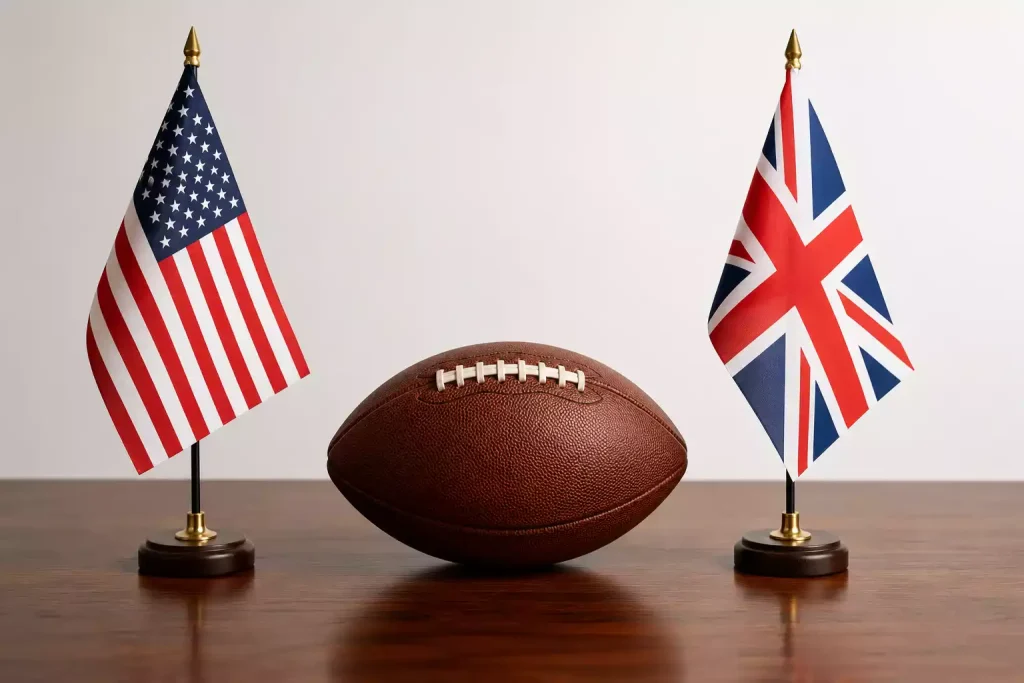
NFL Handicap Betting Explained: How UK-Style Handicaps Compare to US Spreads
 Available in US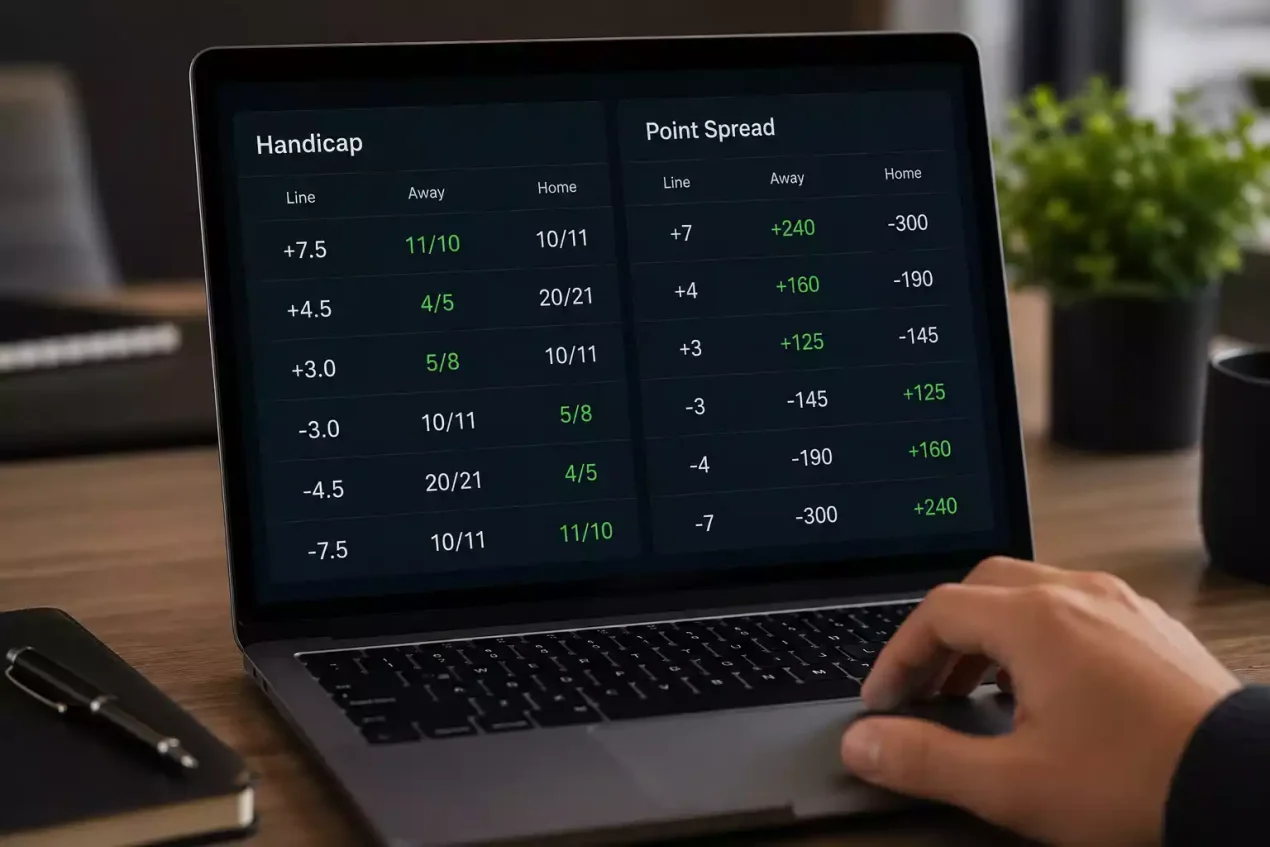
When a UK sportsbook lists an NFL game with a “handicap” of -6.5 next to the favourite, they are showing you exactly the same bet that an American sportsbook calls the “point spread”. The concept is identical: a numerical advantage or disadvantage applied to a team’s final score to level the betting field. But the way UK bookmakers display, price, and expand on handicap markets differs from the American presentation in ways that matter for your betting — particularly when you start exploring alternative handicap lines, which are one of the most underused tools in an NFL punter’s toolkit.
UK Handicap Market vs American Spread: Pricing, Display and Outcomes
The point spread is the dominant NFL bet type in the United States, preferred by 61% of NFL bettors ahead of the moneyline at 52% and over/under at 47%. In the UK, the same bet lives under the “handicap” header in your sportsbook’s NFL section — and the first thing you will notice is that the pricing looks different.
American sportsbooks typically price both sides of the spread at -110 — risk $110 to win $100. This translates to 10/11 in fractional odds or 1.91 in decimal. UK bookmakers often display the same price in fractional or decimal format, but some operators vary the odds on each side rather than varying the handicap number itself. Where an American book might move the spread from -6.5 to -7 while keeping the price at -110, a UK bookmaker might keep the handicap at -6.5 and adjust the price from 10/11 to 5/6 on one side and evens on the other.
This distinction matters because it changes how you read line movement. On an American sportsbook, the number moves and the price stays roughly constant. On some UK sportsbooks, the number stays and the price moves. Both approaches reflect the same underlying market dynamic — money flowing to one side — but you need to know which model your sportsbook uses to interpret the signal correctly.
The outcome mechanics are identical across both systems. If the handicap is -6.5 and the favourite wins by 7 or more, the favourite covers. If they win by 6 or fewer (or lose), the underdog covers. The half-point eliminates pushes, the settlement is binary, and the only variable is how the bookmaker chose to display and price the market.
UK sports betting generates approximately GBP 2.48 billion in annual gross gambling yield, and as NFL’s share of that yield grows, UK operators are aligning their NFL handicap displays more closely with the American format — using half-point lines, standard 10/11 pricing, and the same terminology (“spread” is increasingly used alongside “handicap” in UK sportsbook menus). The convergence makes it easier for UK punters to use American analytical resources without translation, which is a practical benefit of the market’s maturation.
Alternative Handicap Lines: How to Get Better Odds by Adjusting the Line
The standard handicap is the bookmaker’s main line — the number they consider most likely to produce equal action on both sides. But most UK sportsbooks also offer alternative handicap lines: adjusted spreads that give you a different number at different odds. This is where the real flexibility lives, and it is a market that most recreational punters never explore.
If the standard handicap on a game is -6.5, alternative lines might include -3.5, -4.5, -7.5, -10.5, and -13.5 — each with different odds reflecting the changed probability. Backing the favourite at -3.5 (a smaller margin of victory required) costs you in odds — the price might be 1/2 or shorter. Backing them at -10.5 (a larger margin required) gives you longer odds — perhaps 2/1 or higher. You are trading certainty for price, or price for certainty, depending on your view of how the game will play out.
The strategic value of alternative handicaps lies in key numbers. In the NFL, final margins of 3 and 7 occur significantly more often than any other single margin — 3 because field goals are worth three points, and 7 because touchdowns with conversions are worth seven. If the standard handicap is -6.5, moving to -7.5 crosses the key number of 7 and increases the probability of the favourite failing to cover. That one-point adjustment might lengthen the odds from 10/11 to 6/5 — a meaningful price improvement that reflects a genuine shift in probability.
Conversely, if the standard handicap is -7.5 and you believe the favourite will win comfortably, buying down to -6.5 gives you a shorter price but crosses the key number in your favour. The team now only needs to win by 7 rather than 8 — and because margins of exactly 7 are common, that single-point adjustment moves a meaningful percentage of outcomes from “loss” to “win”.
Alternative handicaps are also useful in accumulators. If you want to include a heavy favourite as a “safe” leg in an NFL acca, a -3.5 alternative handicap at short odds is often more reliable than the standard handicap at bigger numbers. The reduced odds are offset by the higher probability of covering, which strengthens the overall accumulator without introducing the same level of variance that a standard handicap carries.
When Backing the Handicap Makes Sense Over the Spread
In practical terms, the handicap and the spread are the same bet. But the way UK sportsbooks structure their alternative handicap menus — with more granular line options and more varied pricing — sometimes creates opportunities that the standard American spread presentation does not. The question is not “which is better?” but “which format gives me the best price for the outcome I expect?”
If you have a strong view on the margin of victory — not just who wins, but by how much — alternative handicaps let you express that view with precision. A standard spread bet is a blunt instrument: the team covers or it does not. An alternative handicap lets you calibrate the line to your specific expectation and find the price that offers the best value for that outcome.
One scenario where UK-style handicap menus have a genuine edge: games with large spreads. When the standard line is -14.5, the alternative handicap menu might include -10.5, -17.5, -20.5, and beyond. American sportsbooks offer alternate spreads too, but UK operators sometimes price the extremes differently — particularly on games that attract less public attention, where the trading team may have less precision at the far ends of the range. If you have a conviction that a blowout is coming (or that the spread is inflated), the alternative handicap at the tail of the distribution can offer outsized value. For a more detailed breakdown of how point spreads work mechanically and the strategies that apply to standard spread betting, the spread betting guide covers the fundamentals.
Same Bet, Better Tools
The handicap is the spread. The spread is the handicap. Once you accept that the underlying bet is identical, the practical question becomes: which sportsbook gives you the best price at the line you want? UK operators’ alternative handicap menus, combined with the ability to toggle between fractional, decimal, and American odds formats, give you more flexibility than many punters realise. The edge is not in the bet type — it is in the granularity of the line you choose and the price you accept.
Is an NFL handicap bet the same as a spread bet at a UK bookmaker?
Yes. The handicap and the point spread are the same bet — a numerical advantage or disadvantage applied to a team’s final score. UK bookmakers label it as a handicap; American sportsbooks call it the spread. The outcome, settlement, and mechanics are identical. The only differences are in display format (how the odds are shown) and how some UK operators adjust pricing versus adjusting the line number.
What is the difference between a standard handicap and an alternative handicap line?
The standard handicap is the bookmaker’s main line — the number they expect to attract equal action on both sides, typically priced at 10/11 on each outcome. Alternative handicap lines let you adjust that number up or down in exchange for different odds. A smaller handicap (e.g. -3.5 instead of -6.5) is easier to cover but pays shorter odds. A larger handicap (e.g. -10.5) is harder to cover but pays longer odds. Alternative lines are useful when you have a specific view on the margin of victory.
This material was created by the GridPunt team.
Related posts

NFL Betting Market Outlook for UK Punters: Trends Shaping 2026 and Beyond
NFL Betting Mistakes to Avoid: Errors That Cost UK Punters Money